Thought Work and Journaling Prompts: A Repeatable Process for a Stuck Thought
Thought work is the practice of getting your thinking out of your head and onto paper. Journaling prompts help with this. A good prompt gives a busy thought a specific place to go. It stops the thought from circling in the background all day.
This is one of the most useful skills you can build for your own mental clarity. It does not require special training. It just requires a process you can trust, and a habit of actually using it.
Most people already know journaling helps. The harder part is knowing what to write. This is true when a thought feels big or hard to summarize in a sentence. That gap is where a lot of journaling stalls out. A blank page can hold almost anything. That sounds freeing, until you are staring at one.
How Repetitive Thinking Shows Up in Everyday Life
Unprocessed thoughts rarely stay quiet. They resurface in small, familiar ways. Common patterns include:
•The same worry replaying at night, in almost the same words each time
•A decision you keep circling back to, without feeling closer to clarity
•Trouble naming what is actually bothering you, only that something is
•Journaling in bursts, then stopping once things calm down
•Writing a page of thoughts and feeling only slightly lighter
These patterns show up in very different areas of life. A work decision. A family conflict. A goal that keeps stalling. The underlying experience is often the same. A thought has not been processed enough to lose its grip.
The same thought can show up in more than one form too. It might arrive as a worry at night. It might arrive as tension in your chest during the day. The thought has not changed. Only the way it shows up has.
The Challenge With Journaling Alone

Most advice on this topic gives one instruction: journal about it. That advice is not wrong. It is also incomplete. Blank page journaling works well for some people, in some moments. For a repetitive or heavy thought, a blank page can feel just as overwhelming as the thought itself.
Design Life Hub calls this fragmented wellness. It means real, useful advice, like journal more, offered with no repeatable process. A blank notebook and a well-meaning tip both point toward the same idea. Neither one gives you a structure to return to next time.
Each piece of advice is reasonable on its own. Journaling does help. Naming a feeling does matter. The problem is not any single suggestion. It is that a new stuck thought shows up needing the same kind of processing, and there is no consistent way to work through it.
You end up with a drawer of half-filled notebooks. The same thought still shows up at eleven at night. The missing piece was never motivation. It was a repeatable process for moving a thought from stuck to processed.
That drawer of notebooks is not wasted effort. Each entry was a real attempt to work through something hard. What was missing was a shared shape across the entries, a process that stayed the same from one notebook to the next.
A Small Step Toward a Sustaining Practice
One way to start is to give a stuck thought three jobs on the page. First, get it fully out of your head, in plain language, exactly as it sounds. Second, look back and sort fact from assumption. Third, write one sentence about what you actually want to think or do next.
Those three steps give a journaling session a clear shape. They give it a clear stopping point too. A stuck thought that moves through all three steps often loses some of its grip, even before anything else changes.
This structure also solves the blank page problem. A prompt that only says write about how you feel leaves you to invent your own process every time. A prompt that walks you through get it out, sort it, choose a forward thought gives you a place to start.
How Design Life Hub Helps You Build a Customized Practice
Design Life Hub's resources take that kind of process and turn it into a sustaining, personal practice. The goal is not a generic reminder to journal more. It is a repeatable structure you can apply to whatever thought is loudest for you this week.
This matters because the thoughts worth processing keep changing. A work decision this month. A family conflict the next. A tool that only offers a blank page will not adapt. A guided, repeatable process will, because the steps stay the same even as the topic changes.

A repeatable process also saves you time. You are not starting from scratch each time a new thought shows up. You already know the three steps. You just apply them to whatever is loudest today.
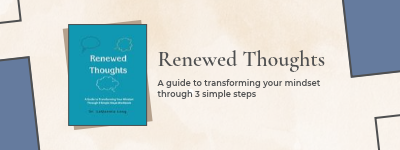
Renewed Thoughts is a guided workbook built around exactly this kind of process. It uses three steps: Brain Dump, Brain Wash, and Brain Fuel. Brain Dump is where a thought gets fully out of your head. Brain Wash is where you sort fact from old pattern. Brain Fuel is where you choose the thought you want to carry forward. The workbook includes several full worksheet cycles. You can use the same three steps on a new topic each time.
For a closer focus on the insight underneath a pattern, Redefined pairs well with this practice. Together they give you a process for getting a thought out, and a structure for reflecting on what it means over time.
Some weeks call for a quick Brain Dump cycle on one loud thought. Other weeks call for a slower, deeper reflection. Having both tools on hand means you can meet the week you are actually in, without forcing every thought through the same single approach.
This content is educational. It is not a replacement for a licensed provider if a thought feels heavy or hard to untangle alone. It is a place to start, or a practice to continue alongside professional support.
Explore Your Next Step: Start Renewed Thoughts today.


