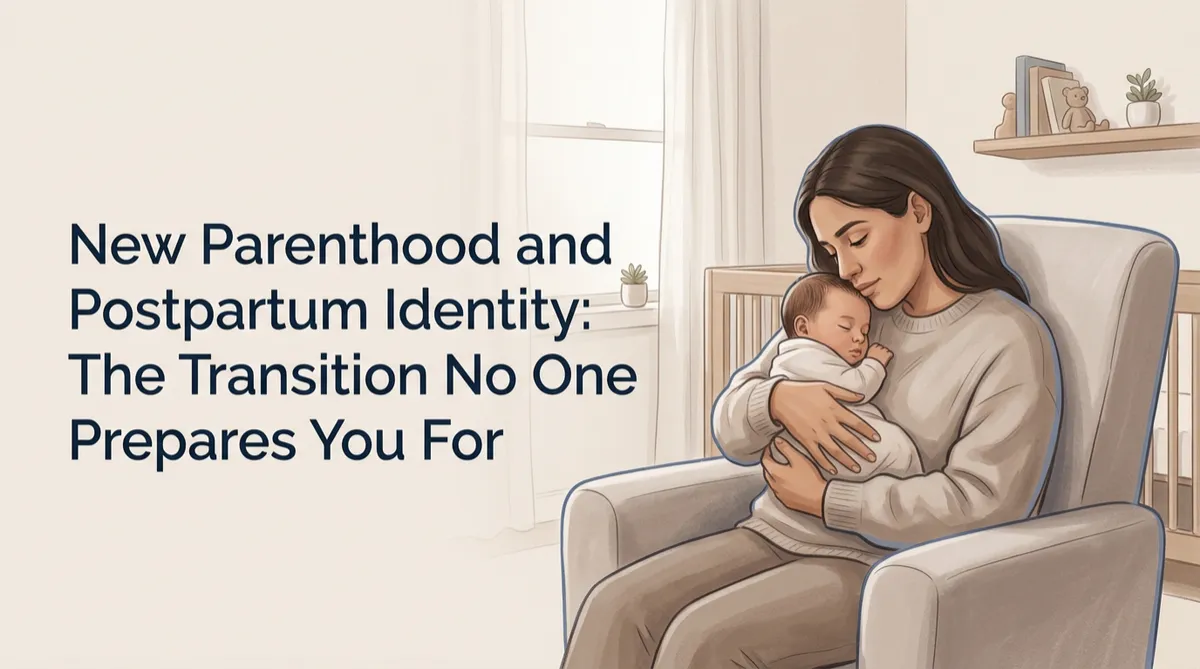
New Parenthood and Postpartum Identity: The Transition No One Prepares You For
New parenthood and postpartum identity cover the developmental shift into becoming a parent. This shift is sometimes called matrescence. It is a real, significant transition in who you are, separate from the practical logistics of feeding schedules and sleep. Most new parent advice focuses heavily on the baby's needs. This part of the transition is about the parent's own identity. It often goes almost entirely unaddressed.
Sleep deprivation alone changes how the brain processes emotion, before anything else in this season even begins. Add a shifting sense of identity. Add a body that feels unfamiliar. Add a role that asks more of you than almost any other. It becomes clear why this season feels so disorienting, even when the baby is healthy and everything is, by most measures, going fine.
This is one of the most quietly difficult transitions a person can go through. It happens while also caring for someone else, in real time, without a script. There is rarely a pause to process the shift itself before the next feeding, the next diaper change, or the next sleepless night arrives.
How This Transition Shows Up in Everyday Life
New parenthood brings a specific, recognizable set of identity experiences, even when every family's daily routine looks different. Common patterns include:
•Not recognizing yourself in the mirror, or in how you respond to ordinary moments, since becoming a parent
•Feeling like you should instinctively know how to do this, and feeling behind when you do not
•An invisible mental load, like tracking feedings, appointments, and supplies, that one partner carries without the other fully seeing it
•Grieving parts of your previous life while also genuinely loving your child, and feeling guilty for holding both at once
•Difficulty telling the difference between the baby blues and something that needs more support
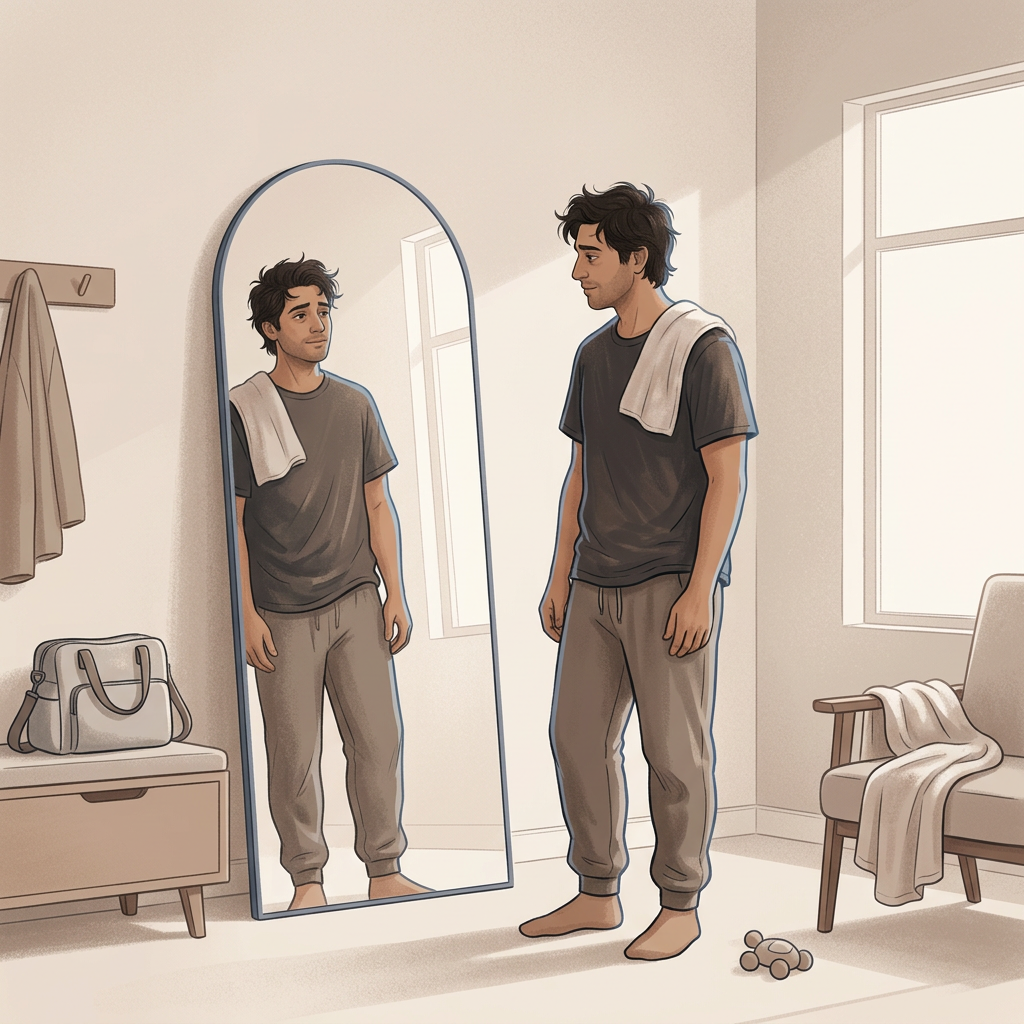
These patterns are common because new parenthood is not simply a logistical adjustment. It is a developmental transition. One that reshapes identity, relationships, and daily life all at the same time, often while running on very little sleep.
This is part of why the season can feel so heavy, even on a good day. The tiredness is real. So is the deeper shift happening underneath it.
The Challenge With Baby-Focused Advice Alone
Most new parent resources focus almost entirely on the baby. Feeding schedules. Sleep training. Developmental milestones. That information matters. It also leaves the parent's own experience, who you are becoming and what you have set aside, largely unaddressed.
Design Life Hub calls this fragmented wellness. It means real, useful baby care information, offered without a parallel structure for the parent's own emotional and identity transition happening at the same time. A well-stocked nursery and a sleep schedule do not, on their own, address the disorientation of not recognizing yourself in the mirror.
Well-meaning advice can add to the gap here too. Enjoy every moment, or sleep when the baby sleeps, treats this season as a logistics problem to manage. Much of what is actually happening is a deeper identity shift. Logistics alone cannot address that.
Parents end up prepared for the baby's needs and unprepared for their own transition. Caring for the baby was never the only missing piece. Space to name what is happening to the parent was missing too, along with a structure for staying emotionally steady through it.
A Small Step Toward a Sustaining Practice
One way to start is a short weekly check-in with yourself, and with a partner if you have one. Use a simple screening question: is this the ordinary hard of a new baby, or does it feel like something more? Naming it out loud, honestly, once a week, keeps that distinction from getting lost in the exhaustion of daily life.
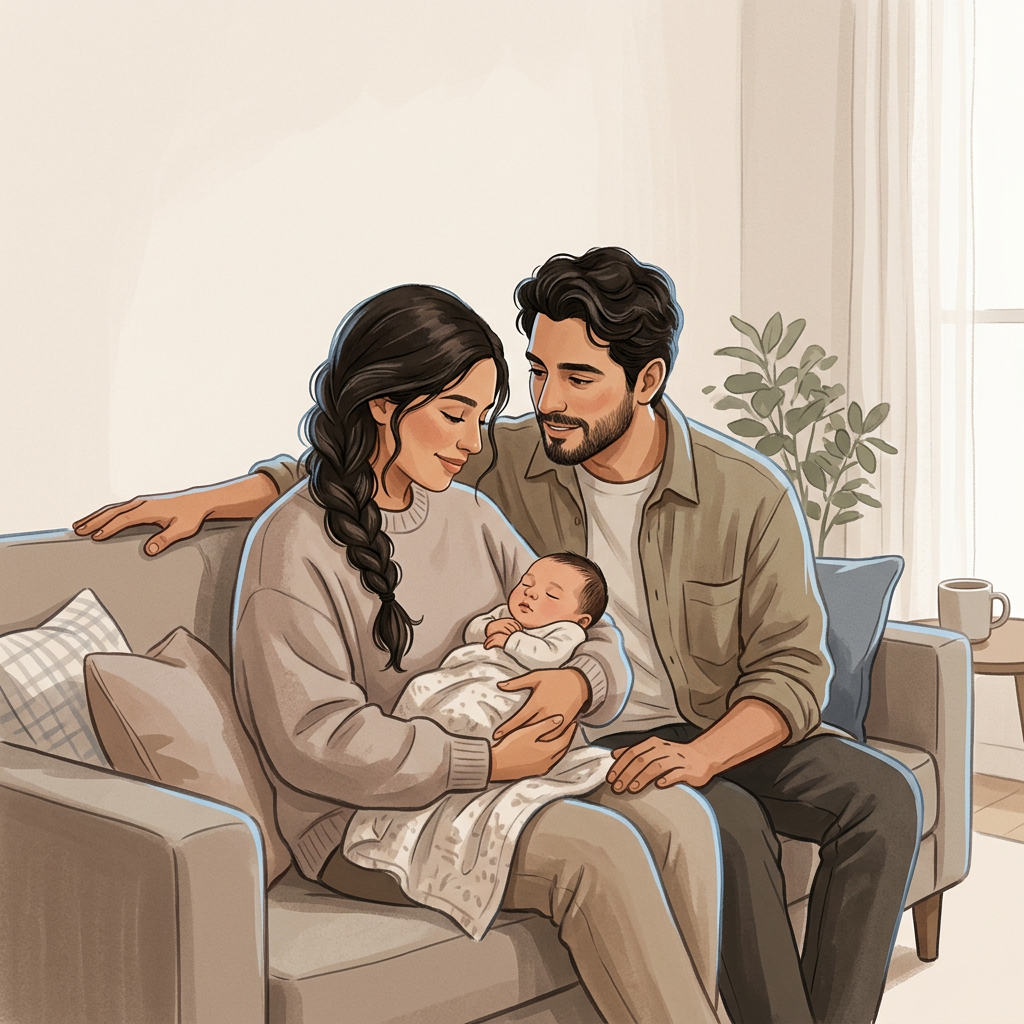
If a partner is involved, pair that question with one more: what has felt invisible this week? The mental load. The emotional weight the other person may not have fully seen. Naming the invisible load out loud is a small, repeatable way to keep both partners adjusting together. The transition does not fall quietly on one person alone.
How Design Life Hub Helps You Build a Customized Practice
Design Life Hub's resources take that kind of honest weekly check-in and turn it into a sustaining, guided practice. The goal is not another guide to feeding schedules. It is a structure built specifically for the identity transition of new parenthood, the part of this season most resources skip.
That structure matters because this transition does not end when the newborn stage does. The identity questions raised in the first three months often continue well into the first year and beyond, changing shape as the baby grows. A guided kit built to be revisited keeps pace with the transition as it continues to unfold.
It also gives language to something that can otherwise feel hard to explain, even to people who love you. Once you can name what is happening, it becomes much easier to ask for the specific support you actually need.
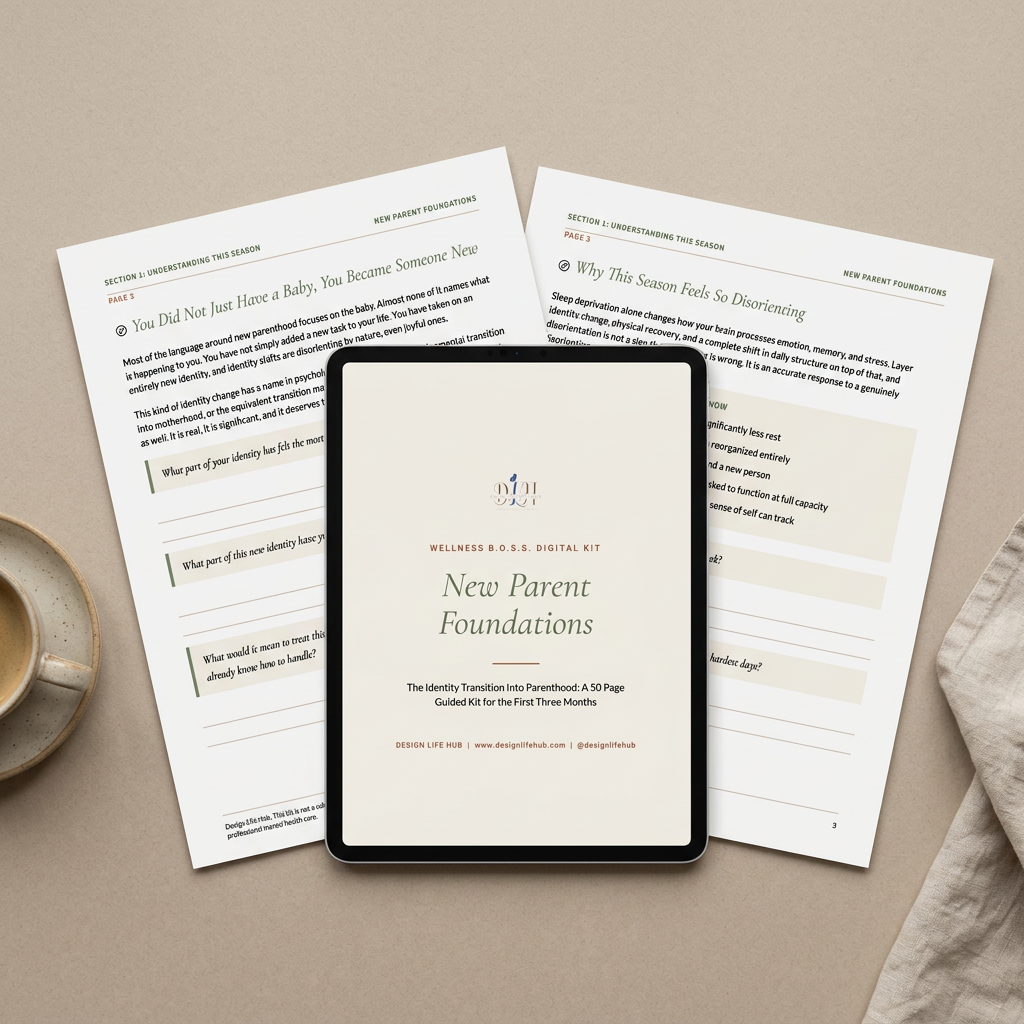
New Parent Foundations is a guided digital kit built for exactly this transition, covering the first three months of new parenthood. It names matrescence directly. It includes a gentle screening page for telling the baby blues apart from something that needs more support. It moves through mindset work that rejects the myth of the instinctively capable parent. Reflective journaling, a letter to a future self one year from now, and communication tools for dividing the invisible mental load help both partners adjust together. It closes with a 30-day adjustment plan and a 90-day vision.
For families navigating a NICU stay or medical complexity, NICU and Medical Complexity Parent Support offers emotional support built specifically for that unexpected season. For a narrative companion to this same identity transition, The Shape in the Mirror explores becoming a parent through allegory.
This content is educational. It is not a replacement for support from a licensed provider if postpartum symptoms feel heavy or concerning. It is a place to start, or a practice to continue alongside professional support.
Explore Your Next Step: start New Parent Foundations today.