Blended and Step Family Life: Building Something New at Its Own Pace
Blended and step family life is the ongoing work of building a new family structure. It has its own pace, its own trust to earn, and its own rhythm to find. It is not simply adding people together into an existing shape. It is building something genuinely new. The usual expectations for how a family should feel often do not apply yet.
Blending a family is one of the most rewarding, and most misunderstood, transitions a family can go through. Much of the pressure in this season comes from measuring a new blended household against a biological family template. That template was never going to match, at least not on the same timeline.
This is one of the more searched family topics for a specific reason. Very little cultural guidance exists for what a blended household should actually look like. Families end up filling that gap with a biological family image that does not quite fit their situation.
How This Transition Shows Up in Everyday Life
Blended family life brings a specific, recognizable set of experiences, even when the household itself looks different from family to family. Common patterns include:
•A child showing loyalty binds, a sense that caring about a stepparent means betraying a biological parent
•Comparing a stepparent's connection with a child to a biological parent's, and feeling discouraged when it feels different
•Tension over parenting roles, like who disciplines and who decides, that neither partner fully worked out beforehand
•Visible friction or slow bonding read as a sign something is wrong, when it is often just this pace
•Household rules, routines, and roles that used to run separately, now needing to work as one shared system
These patterns are common because blending a family is not simply combining two existing households. It is building an entirely new one. New structures take real time to settle into something that feels steady.
That settling time is easy to underestimate. A biological family had years to build its rhythm. A blended family is often expected to find that same rhythm in months.
The Challenge With Comparing to a Biological Family Template
Most family advice is written with a biological family in mind. General parenting tips. General communication advice. That advice is not wrong. It also does not address the dynamics unique to a blended household. Loyalty binds. Comparison. Parenting role negotiation. The slower, uneven pace of trust building across a household that formed differently.
Design Life Hub calls this fragmented wellness. It means real, useful general parenting advice, offered without addressing the specific dynamics a blended family actually navigates. A tip that works well in a biological family, like a stepparent stepping into discipline the way a biological parent would, can genuinely backfire in a blended one.
Well-meaning family and friends often add to the gap. They offer advice built for a family that formed a different way. A grandparent's suggestion to just treat every child the same can land as dismissive of loyalty binds that are genuinely real for a child, even when the advice comes from a place of care.
Families end up measuring their real, uneven progress against a template that was never built for their situation. They conclude something is wrong. The real issue was never the pace itself. What was missing was a structure built for the specific pace a blended family actually needs.
That difference matters. One version leaves a family feeling behind. The other simply points to a missing tool, one that is much easier to build.
A Small Step Toward a Sustaining Practice
One way to start is a short household meeting, once a week. Every household member gets one sentence to answer: what felt good this week, and what felt hard. Keep it brief and low pressure, especially for younger children. Resist the urge to fix or explain in the moment.
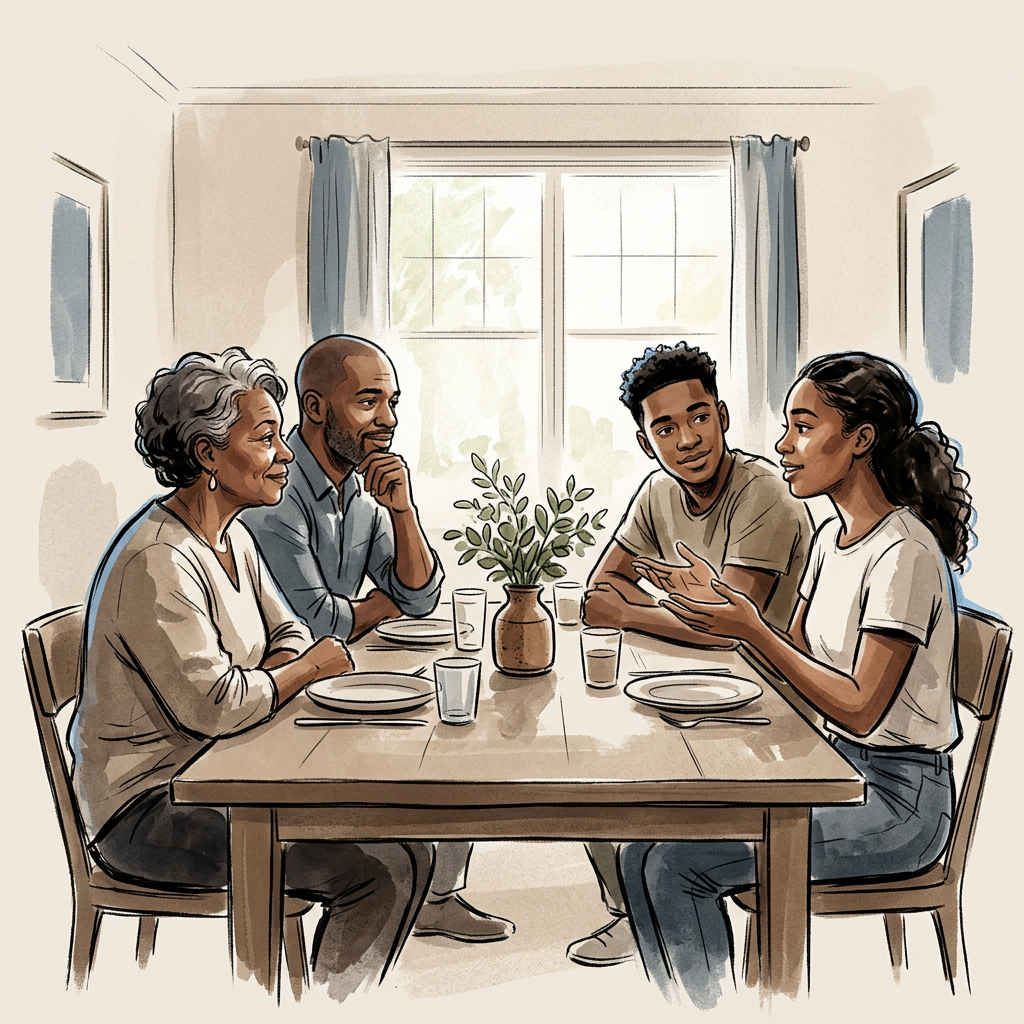
This kind of regular, low stakes check-in gives loyalty binds, discomfort, and friction somewhere safe and expected to surface. It happens on a predictable schedule, so they do not build silently until a small moment turns into a bigger one. It also models, for children specifically, that naming a hard feeling out loud is a normal part of how this family works.
A single meeting will not settle every tension in the house. It gives everyone a shared, steady place to bring what is real. That alone tends to lower the pressure on the rest of the week.
How Design Life Hub Helps You Build a Customized Practice
Design Life Hub's resources take that kind of honest household check-in and turn it into a sustaining, guided practice. The goal is not general parenting advice borrowed from a biological family template. It is a structure built specifically for the real, uneven pace of blending a family.
That structure matters because a blended household keeps evolving. The dynamics in the first year, still establishing trust and routine, look different from the dynamics several years in. Roles may have settled by then, but new milestones, like a graduation, a move, or a new sibling, bring their own adjustment. A guided kit built around ongoing check-ins, not a single fix, grows with the family.
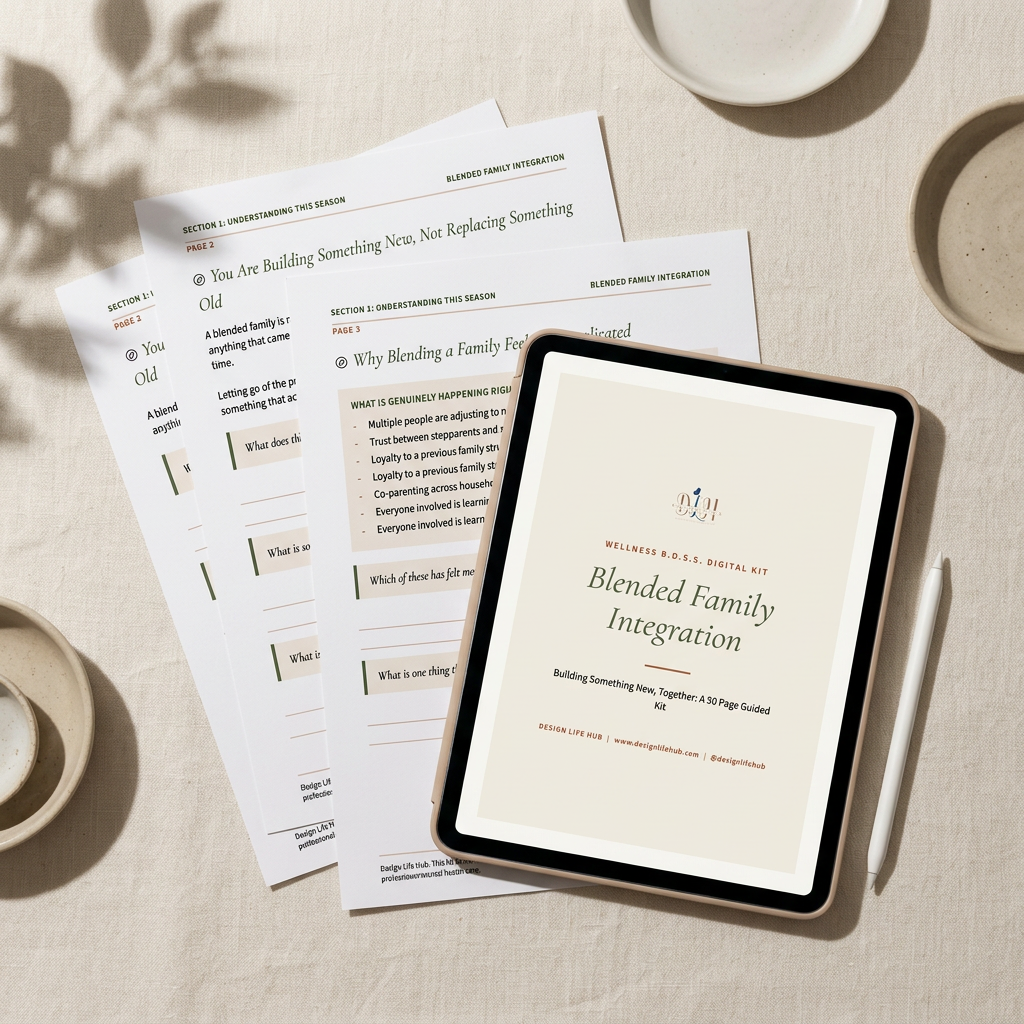
Blended Family Integration is a guided digital kit built around exactly this kind of transition. It starts by naming what is genuinely happening in the household, through an honest emotional wellness check that names loyalty binds and comparison directly. From there it moves into mindset work that reframes common myths about how quickly bonding should happen and what a stepparent's role should look like. Scripts for talking with a partner about parenting roles, a household systems audit for rules, roles, and routines, and a 30-day integration plan help turn that honesty into a working structure.
This content is educational. It is not a replacement for support from a licensed provider or family therapist if a pattern feels heavy or hard to work through alone. It is a place to start, or a practice to continue alongside professional support.
Explore Your Next Step: start Blended Family Integration today.